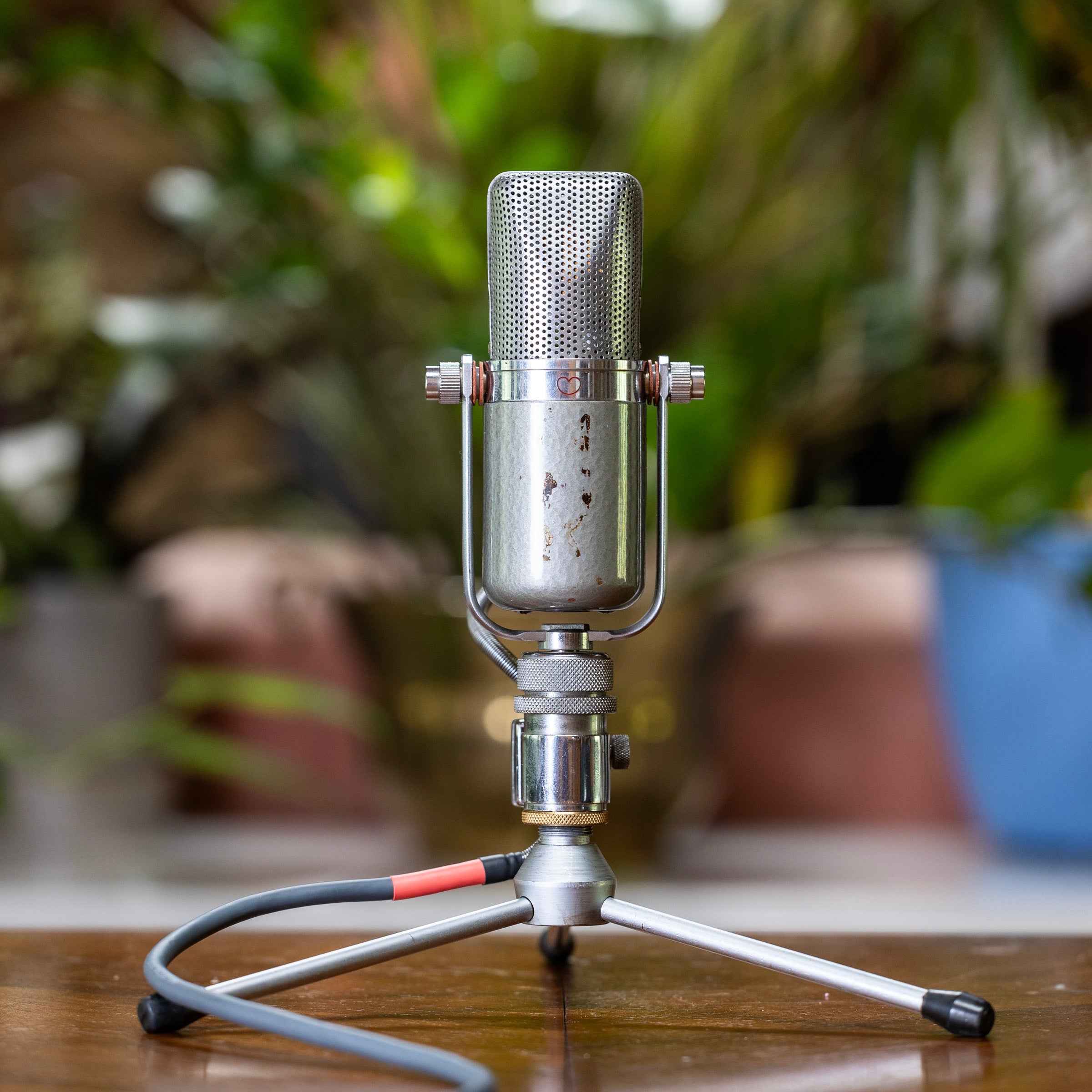
Tsushin Kogyo (Pre-Sony) CU-1
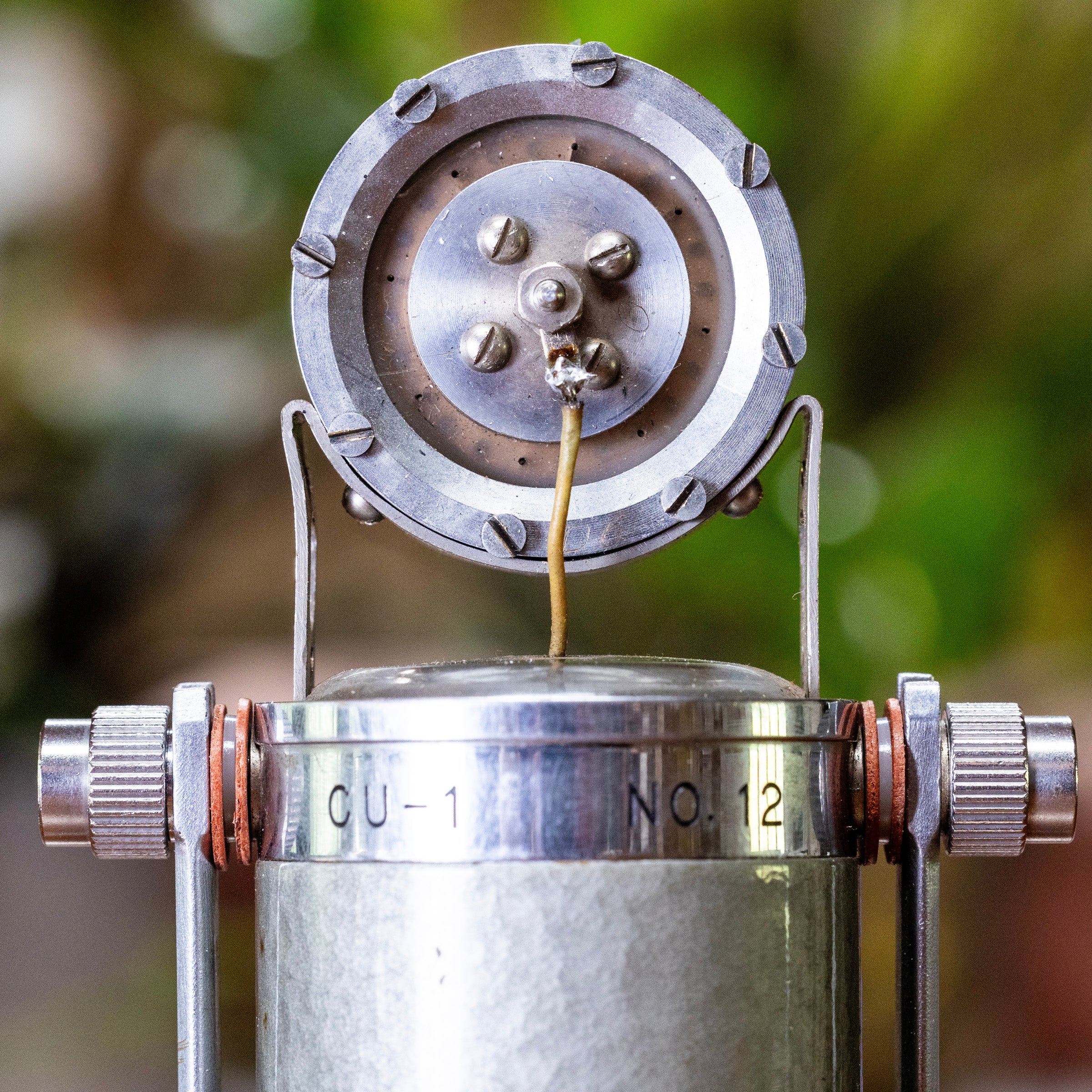
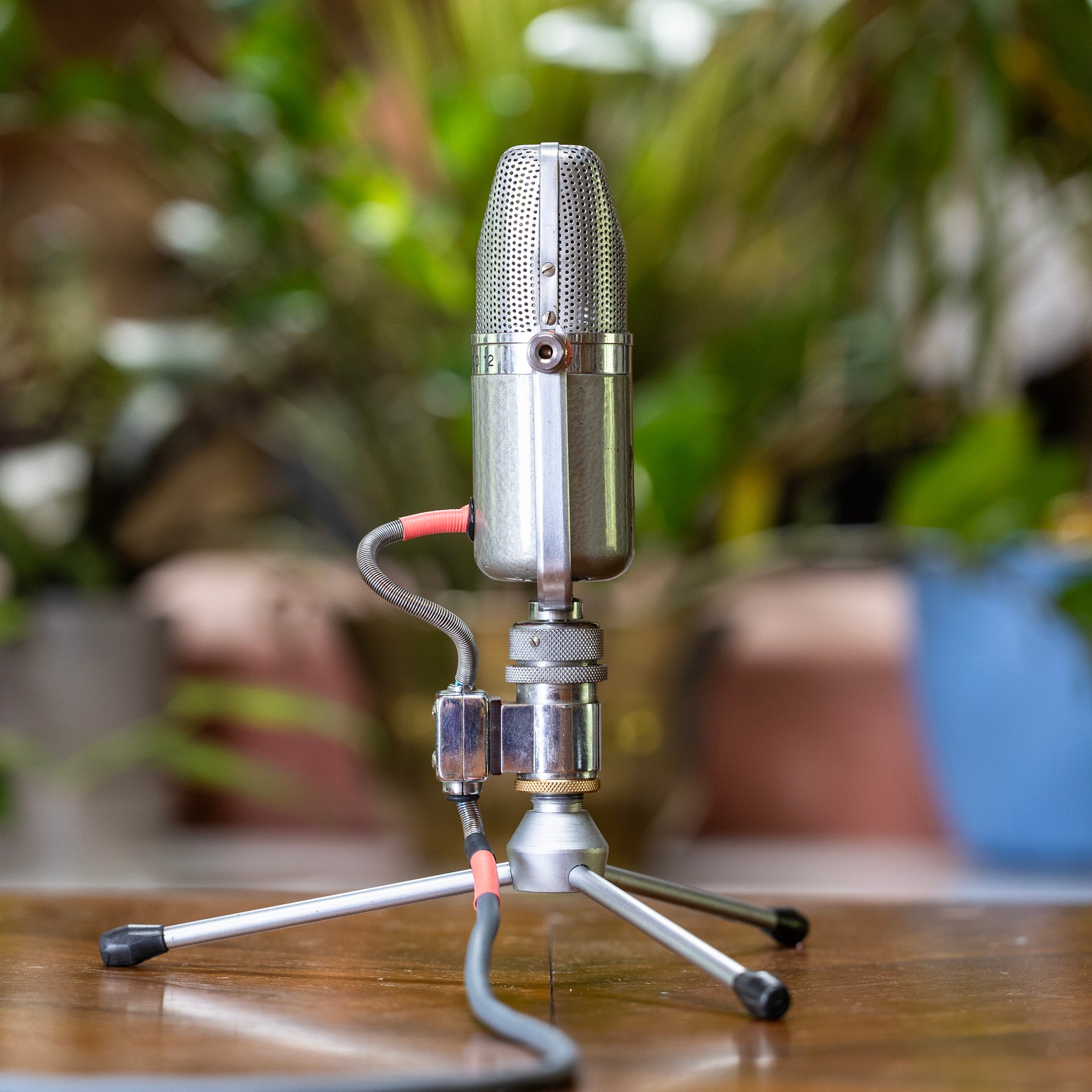
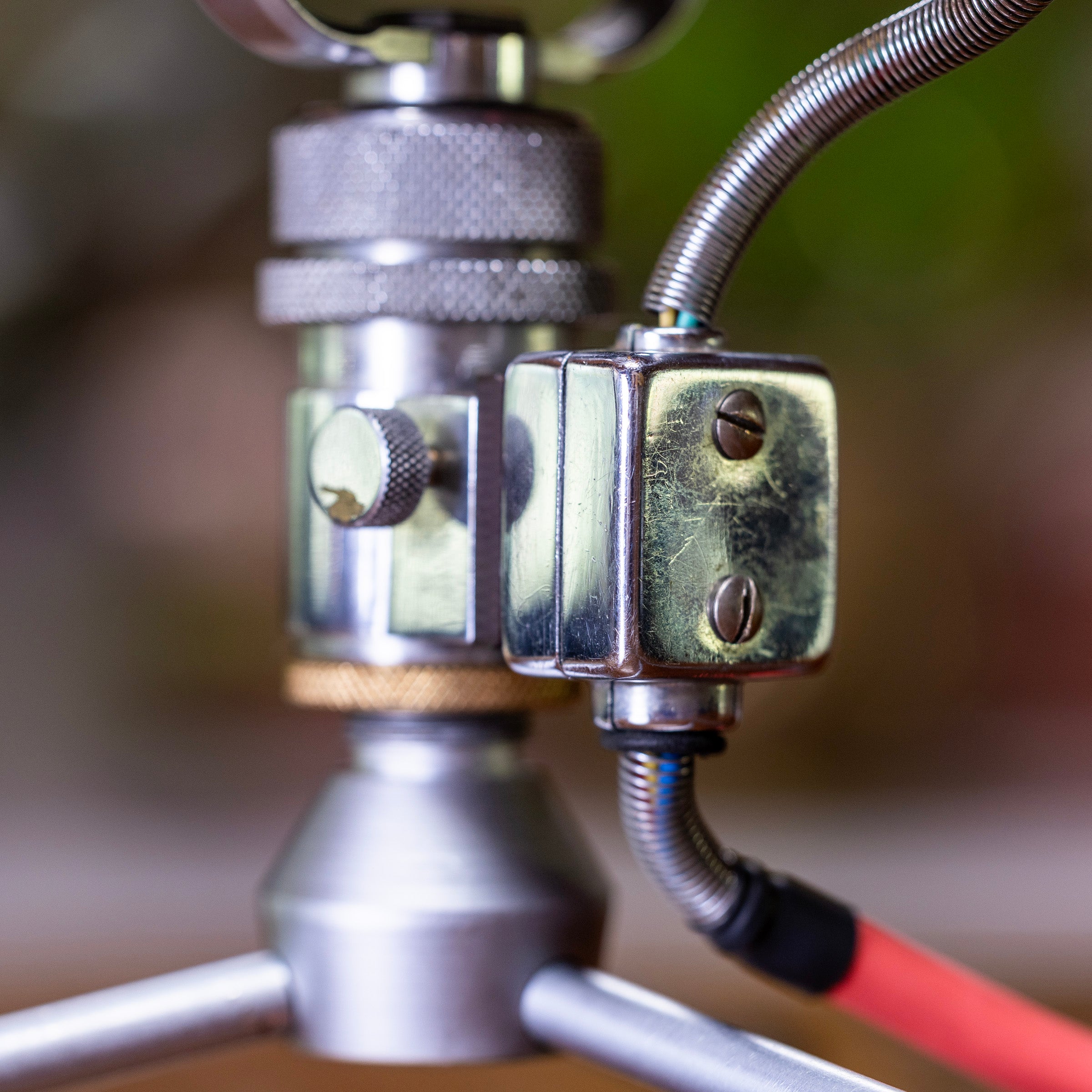
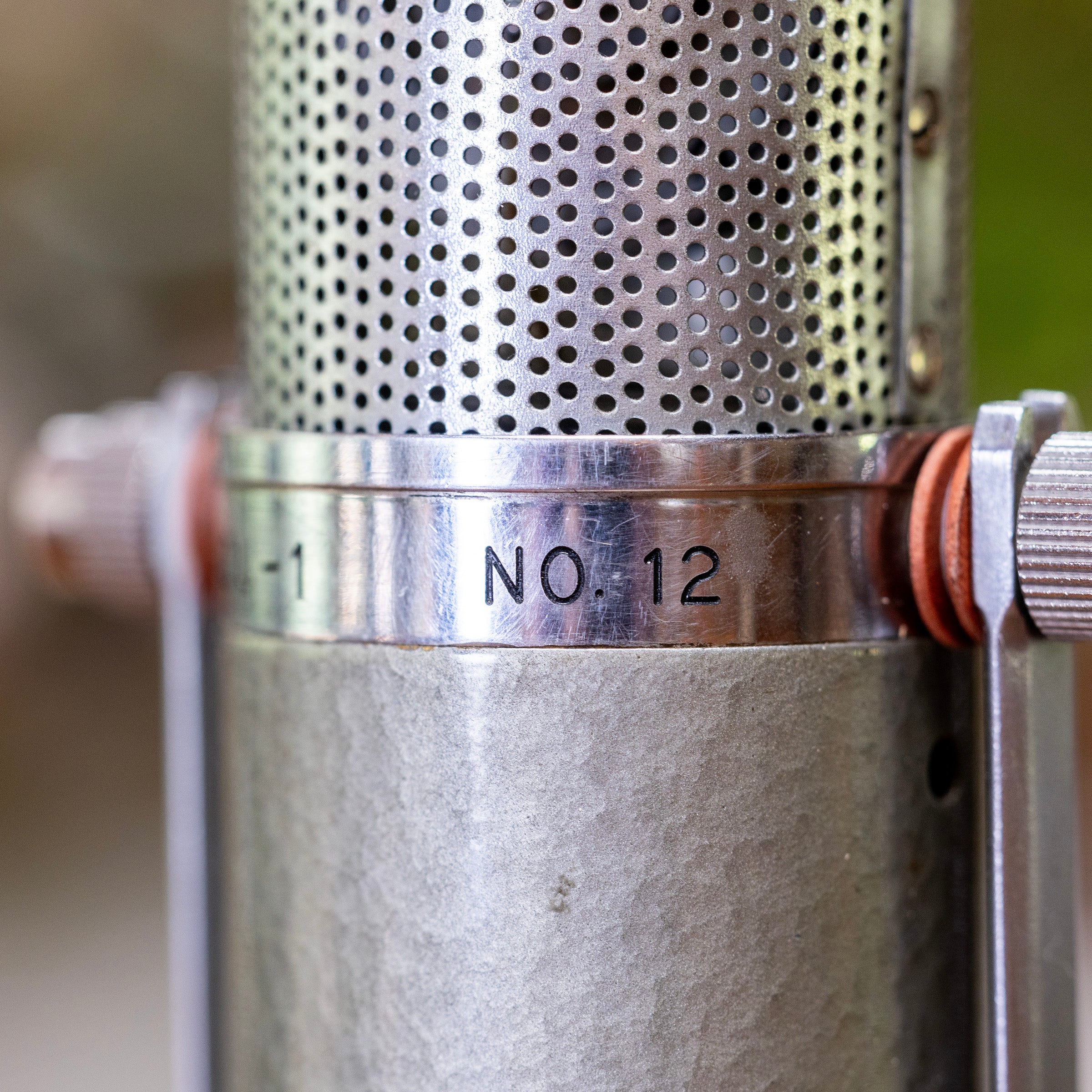
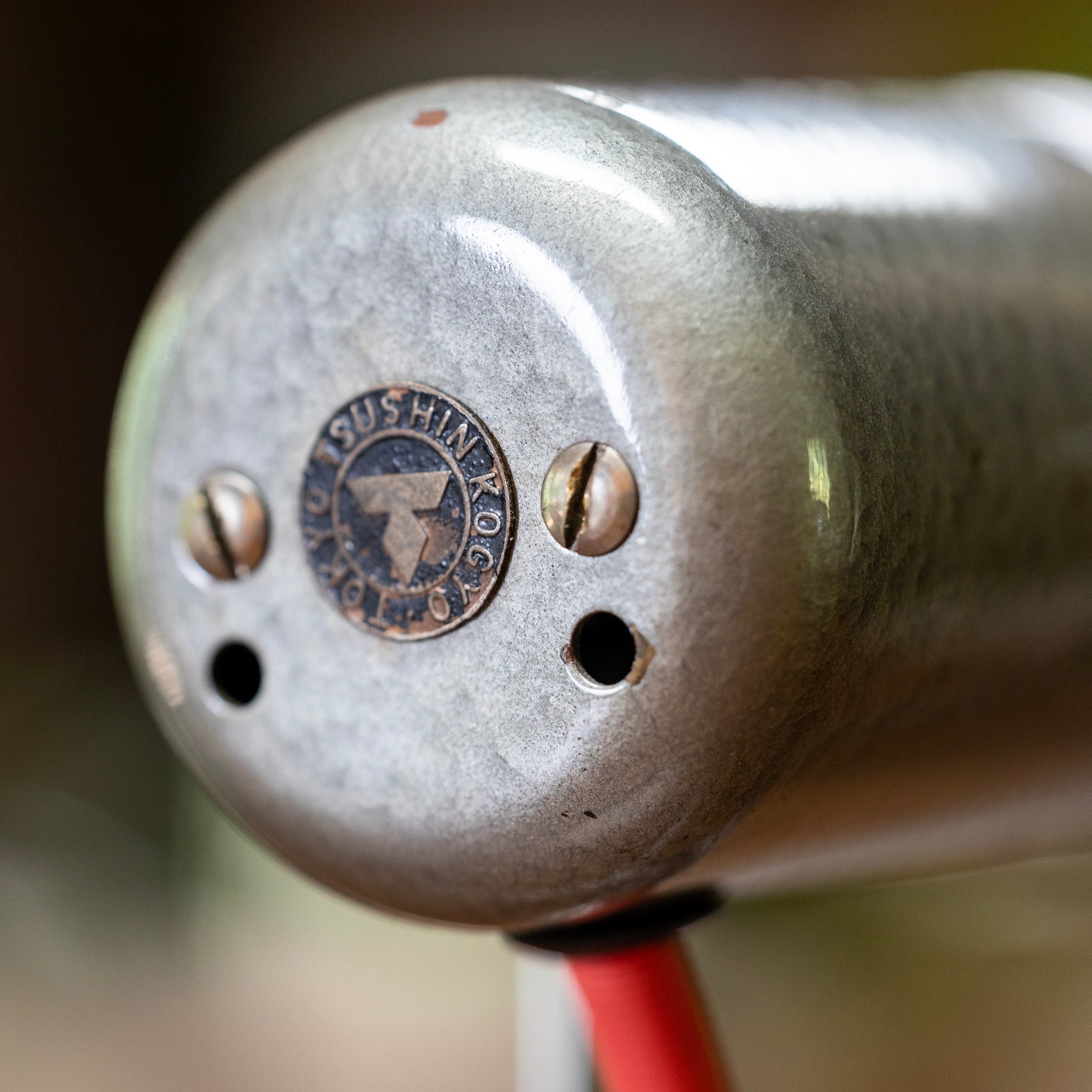
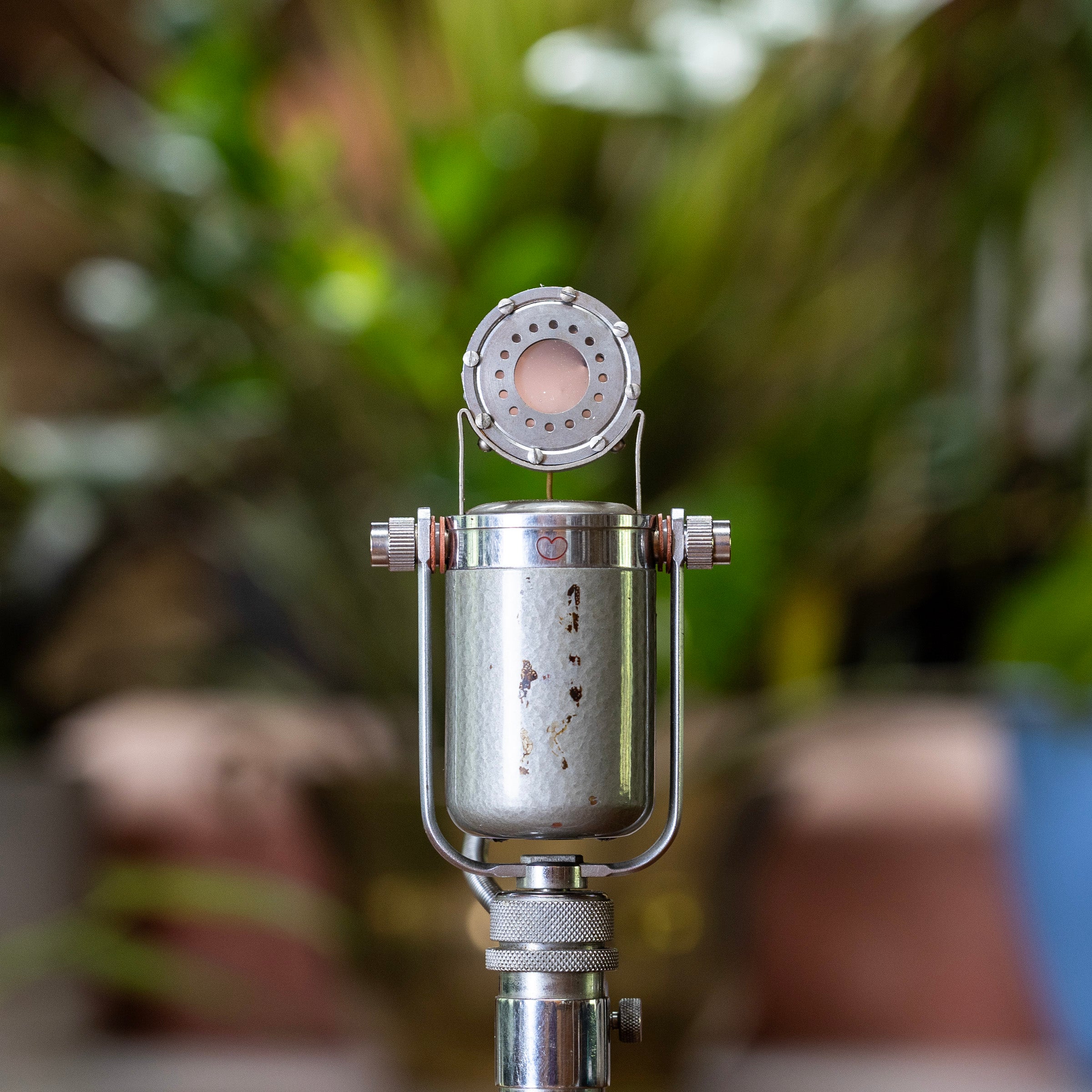
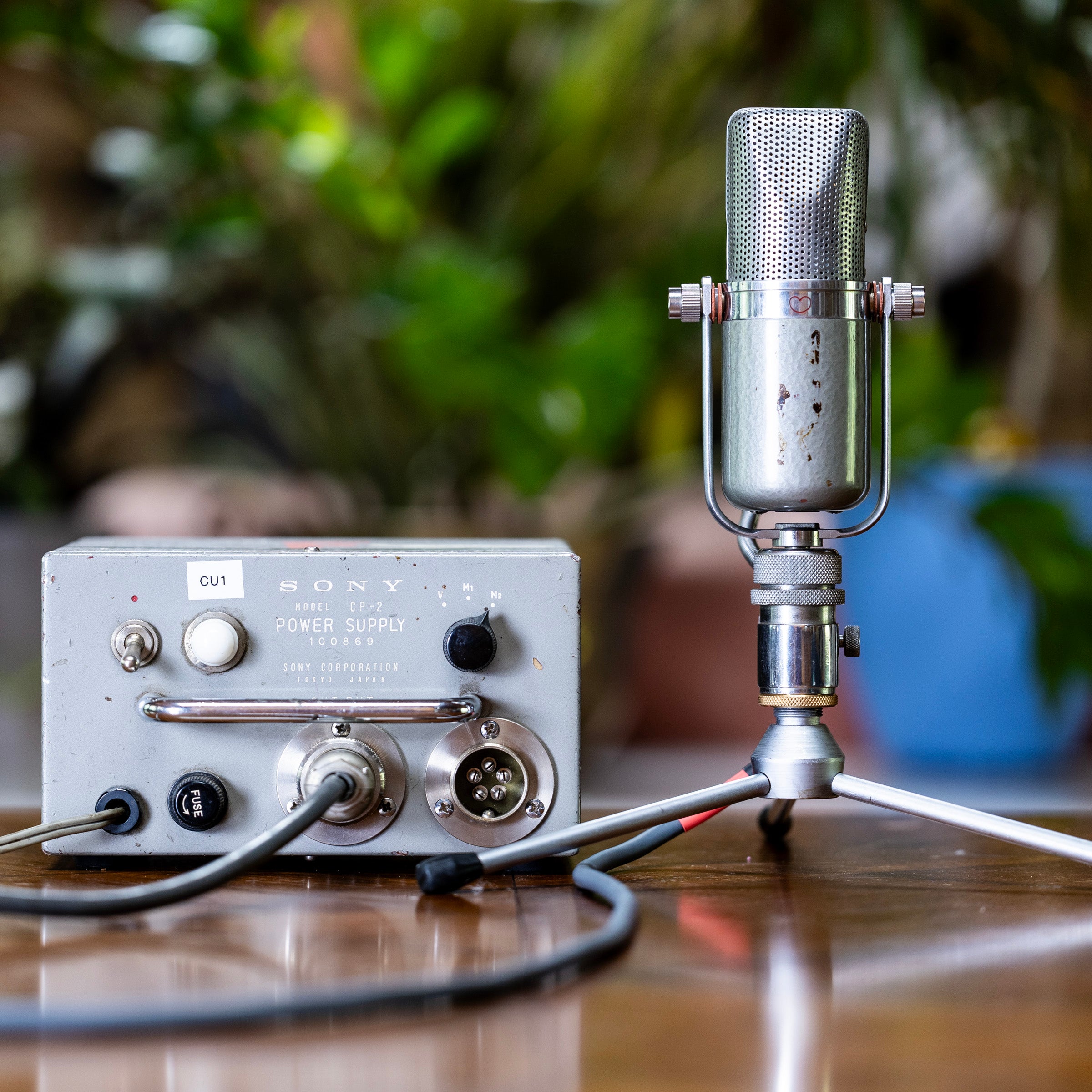
This is number twelve of twelve Tsushin Kogyo CU-1 microphones ever made. Commissioned by NHK in Japan in the 1950s, this was the very first iteration of the iconic Sony C37a microphone. This histortically significant microphone uses the same amplifier circuit as the C37a with a 6AU6 in a cathode-follower configuration. Our CU-1 is paired with a CP-2, but the original was paired with, you guessed it, a CP-1, which is next to impossible to find. I have included a photo of another CU-1 (serial #9) along with its original CP-1 PSU for reference. In that photo you can see the original NHK letters that were glued to the body, and on our CU-1 you can see the glue that was left over from the letters which are now long gone.
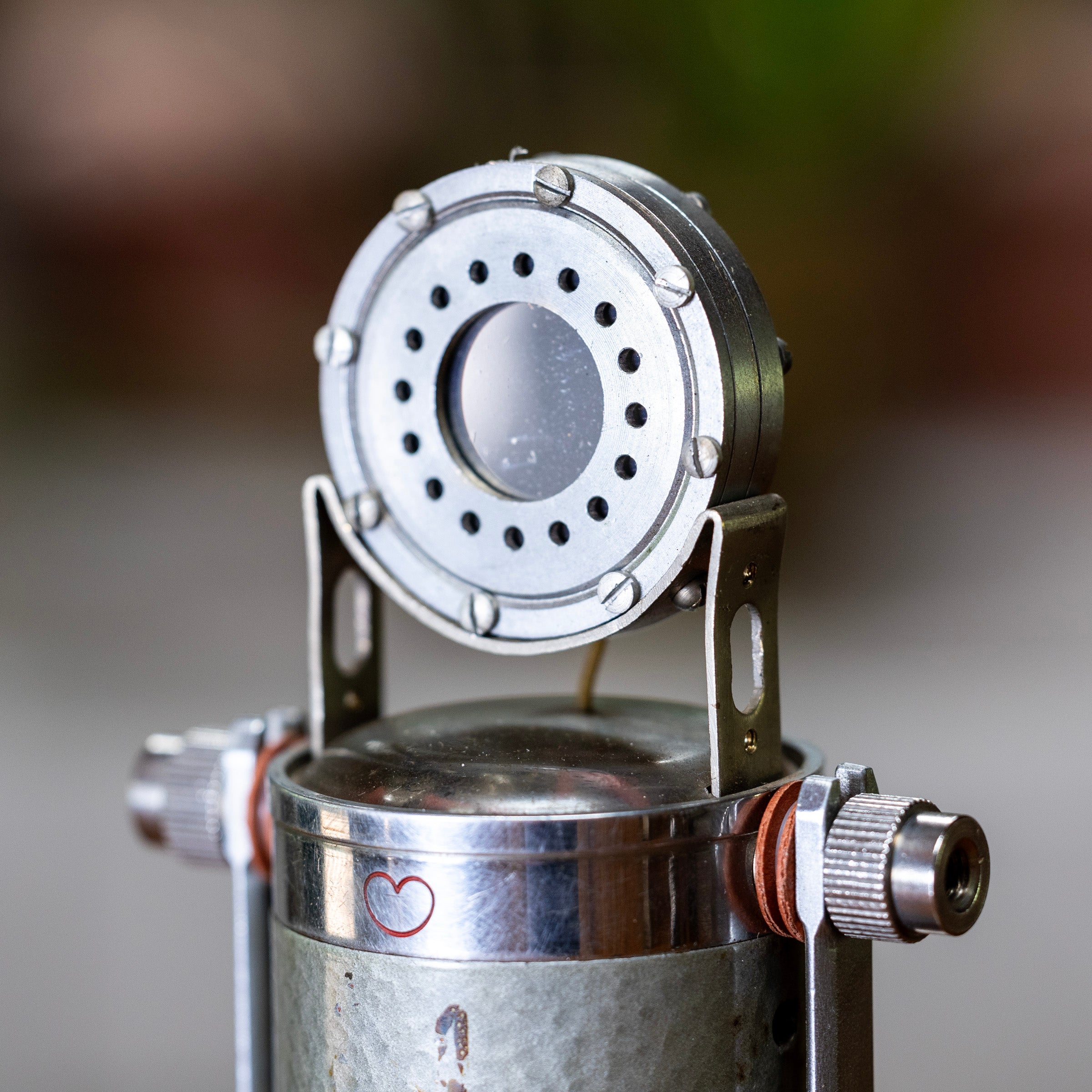
The CU-1 had a proprierary capsule that was quite different from the C3 capsule found in the C37a, C37p and C37b. It was cardioid-only, had a fascinating clamping resonator ring, and used a 45-micron thick copper diaphragm which you can see in the last photo. The original diaphragm was very noisy and unusuable, so we sent it to John Peluso to see what could be done. Using a typical 3-6 micron mylar diaphragm woudln’t work, the capsule sucked it through the backplate. Instead, John sourced a 40-micron thick conductive aluminum sheet which he used to make a diaphragm for the mic and installed it with the same tension as the original. And believe it or not, the mic sounds absolutely incredible! We were shocked to find out that despite its low output (which makes sense since the diaphragm is so thick), it’s not only full range, but also pretty impressive sounding.
You can hear it used to record a full song where it was used on every instrument at the audio player below.
| Manufacturer | Sony |
|---|---|
| Model | CU-1 |
| Country of Origin | Japan |
| Year | 50's |
| Microphone Type | Valve (6AU6) |
| PSU Model | CP2 |
| Polar Pattern | Cardioid |
| Capsule | LDC |